
Exploring the Evolution of Malware: Statistics and Real-life Examples of Malicious Software in the Wild

The increasing reliance on digital technologies and the internet has transformed the way individuals and organizations operate, but it has also given rise to significant cybersecurity challenges. Cybersecurity is defined as the practice of protecting networks, devices, and data from unauthorized access or criminal use, ensuring the confidentiality, integrity, and availability of information. As cyber threats become more sophisticated and pervasive, organizations face a growing risk of data breaches, financial losses, and reputational damage. The landscape of cybercrime encompasses a wide range of malicious activities, including malware attacks, phishing scams, and ransomware incidents, which exploit vulnerabilities in systems and human behaviour alike. This article aims to explore the critical importance of cybersecurity in today’s interconnected world, highlighting the various types of cyber threats that organizations encounter and the best practices necessary to mitigate these risks effectively. By understanding the complexities of cybersecurity, businesses can better protect their assets and ensure a secure operational environment in an era where cyber threats are an ever-present reality.
Daily Malware Detection: Approximately 560,000 new pieces of malware are detected every day, contributing to a total of over 1 billion malware programs currently in existence.
Ransomware Attacks: Every minute, four companies fall victim to ransomware attacks, highlighting the pervasive nature of this threat.
Malware Attack Volume: In 2023, the worldwide number of malware attacks reached 6.06 billion, marking a 10% increase compared to the previous year 45.
Prevalence of Trojans: Trojans account for 58% of all computer malware, making them the most common type of malware
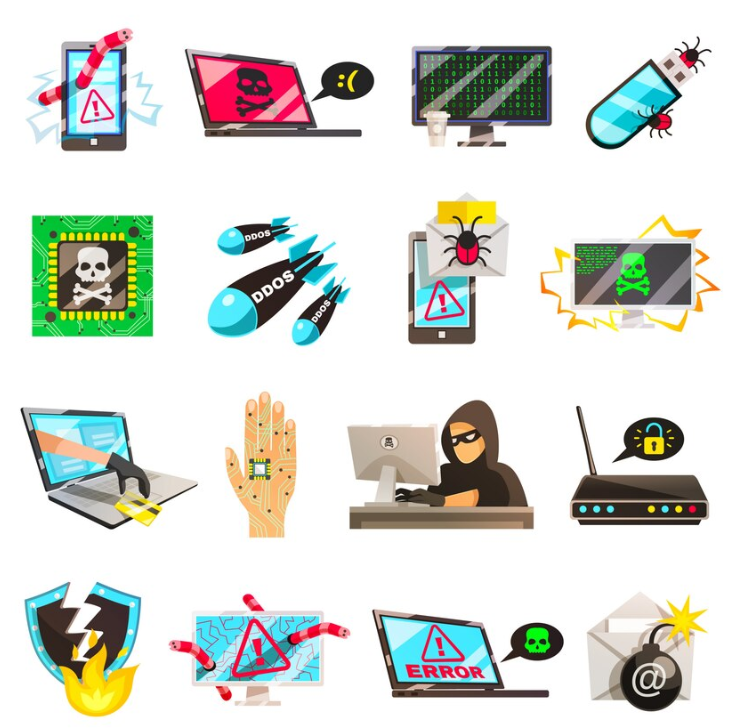
Here are 20 types of malware commonly encountered in cybersecurity:
Ransomware: Encrypts files or locks systems, demanding payment for decryption.
Trojans: Disguises itself as legitimate software to gain unauthorized access.
Worms: Self-replicating malware that spreads across networks without user intervention.
Viruses: Attaches itself to clean files and spreads to other files and systems.
Spyware: Secretly monitors user activity and collects sensitive information.
Adware: Displays unwanted advertisements, often bundled with free software.
Rootkits: Hides its presence and allows unauthorized access to a system.
Keyloggers: Records keystrokes to capture sensitive information like passwords.
Fileless Malware: Operates in memory, avoiding detection by traditional antivirus software.
Botnets: A network of infected devices controlled by an attacker for various malicious purposes, such as DDoS attacks.
Backdoors: Provides unauthorized access to a system while bypassing normal authentication.
Infostealers: Collects sensitive data, such as login credentials and financial information.
Remote Access Trojans (RATs): Allows attackers to control a victim's computer remotely.

Malware Process flow Cryptojackers: Uses the victim's resources to mine cryptocurrencies without their consent.
Scareware: Tricks users into believing their system is infected and prompts them to purchase fake security software.
Malvertising: Uses online ads to distribute malware through seemingly legitimate websites.
Downloader Malware: Downloads and installs additional malicious software onto a victim's device.
Exploit Kits: Tools that leverage vulnerabilities in software to deliver malware.
ATM Skimmers: Devices placed on ATMs to capture card information during transactions.
Point-of-Sale (POS) Malware: Targets retail systems to steal credit card information during transactions.
Examples of most wanted malware
Sality – Virus that allows remote operations and downloads of additional malware to infected systems by its operator. Its main goal is to persist in a system and provide means for remote control and installing further malware.
Cutwail – Botnet mostly involved in sending spam e-mails, as well as some DDOS attacks. Once installed, the bots connect directly to the command and control server, and receive instructions about the emails they should send. After they are done with their task, the bots report back to the spammer exact statistics regarding their operation.
Cryptowall – Ransomware that started as a Cryptolocker doppelgänger, but eventually surpassed it. After the takedown of Cryptolocker, Cryptowall became one of the most prominent ransomwares to date. Cryptowall is known for its use of AES encryption and for conducting its C&C communications over the Tor anonymous network. It is widely distributed via exploit kits, malvertising and phishing campaigns.
Ramnit – Banking Trojan that steals banking credentials, FTP passwords, session cookies and personal data.
Parite – Virus which infects executable files (EXE and SCR) on the infected host and on network drive. It drops a malicious DLL file into the Windows temporary directory which is injected into the explorer.exe process when an infected file is executed.
Virut – Botnet that is known to be used for cybercrime activities such as DDoS attacks, spam, fraud, data theft, and pay-per-install activities. It spreads through executable file infection (through infected USB sticks and other media), and more recently, through compromised HTML files (thus infecting vulnerable browsers visiting compromised websites)
Tinba – Banking Trojan which steals the victim’s credentials using web-injects, activated as the users try to login to their bank website.
HackerDefender – User-mode Rootkit for Windows, can be used to hide files, processes and registry keys, and also implements a backdoor and port redirector that operates through TCP ports opened by existing services. This means it is not possible to find the hidden backdoor through traditional means.
These malware types utilize various techniques to infiltrate systems, steal data, or disrupt operations, highlighting the importance of robust cybersecurity measures.
Malware types employ diverse tactics to breach systems, extract data, or disrupt operations, underscoring the critical need for strong cybersecurity measures.


Comments